How to Clean and Moisturize Car Leather Table of Contents1...
Read MoreCan a car wash cause rust over time?
Table of Contents
- 1 Can a car wash
cause rust
over time?
- 1.1 How is rust actually made?
- 1.2 So, can a car wash cause rust?
- 1.3 Which type of car wash has a higher risk of rust?
- 1.4 Car Wash Type vs Rust Risk (Comparison)
- 1.5 Under what circumstances does washing prevent rust?
- 1.6 Common Myths About Car Wash & Rust
- 1.7 Does Car Wash Make Existing Rust Worse?
- 1.8 Professional Service Options
- 1.9 Cost of Prevention vs Rust Repair
- 1.10 FAQ
- 1.11 You may like!
- 1.12 How to Clean and Moisturize Car Leather
- 1.13 How to Remove Pet Hair From Car Carpets (Madaffah, Abu Dhabi Guide)
- 1.14 Can a car wash remove wax or polish?
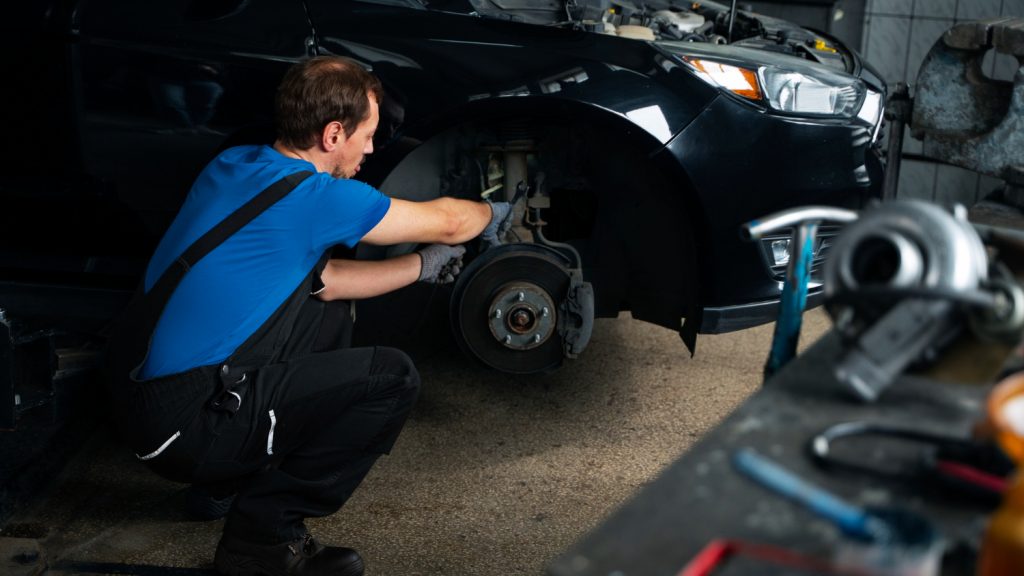
In general, car washes do not cause rust on their own; rather, regular washing protects the car from corrosion. However, if the car’s paint is already scratched or dented, leaving exposed metal, or if water collects in gaps after a wash and does not dry, then rust can begin. Trapped moisture can quickly lead to corrosion, especially in Abu Dhabi’s industrial dust, humidity, and outdoor parking conditions. Proper washing and drying are the keys to avoiding rust.

How is rust actually made?
It is important to understand why rust occurs in cars, because this is where people’s minds go: Does washing a car increase or decrease the damage? In reality, rust forms through a very simple process, but if not cleaned promptly, it spreads quickly.
Iron + Moisture + Oxygen = Rust
The body of a car and many mechanical parts contain iron or steel. When this metal comes into contact with moisture and oxygen in the air, a chemical reaction slowly occurs, resulting in rust.
In general:
- Paint or coating protects the metal
- But if there is a scratch, chip, or paint removal, the metal is exposed.
- Then, when water accumulates, rust begins to form.
- Once it starts, it spreads slowly.
This is why car cleaning and paint protection are so important.
Where does rust grow the fastest?
Not all areas of a car rust at the same rate. Some places are more at risk because they accumulate more dirt and water.
The most vulnerable parts:
- Undercarriage: Mud, salt, and water accumulate under the car.
- Wheel wells: Dirt and moisture get trapped around the tires.
- Door sills: The gap under the door may trap water.
- Exhaust parts: Rapid, constant hot–cold changes
Rapidly deteriorate them. If you do not clean these parts properly, rust builds up quickly, which worries many drivers about car washes.

So, can a car wash cause rust?
Yes, under certain circumstances, car washes can indirectly initiate or increase rust. However, the wash itself does not cause the problem; if the paint protection is damaged or water is trapped somewhere during or after the wash, corrosion can begin.
Conditions under which a car wash can cause rust
The risk of rust after washing may increase if the following conditions are present:
- If an old car has exposed metal, water and air directly contacting it start oxidation.
- If a bad brush or a hard sponge damages the clear coat, the metal layer is gradually exposed.
- If water gets into dents or scratches and stays there for a long time, corrosion will increase inside.
- If the undercarriage is not dried properly after washing, moisture will accumulate underneath.
- Hard water mineral spots weaken the paint layer, increasing the risk of rust developing later.
Which type of car wash has a higher risk of rust?
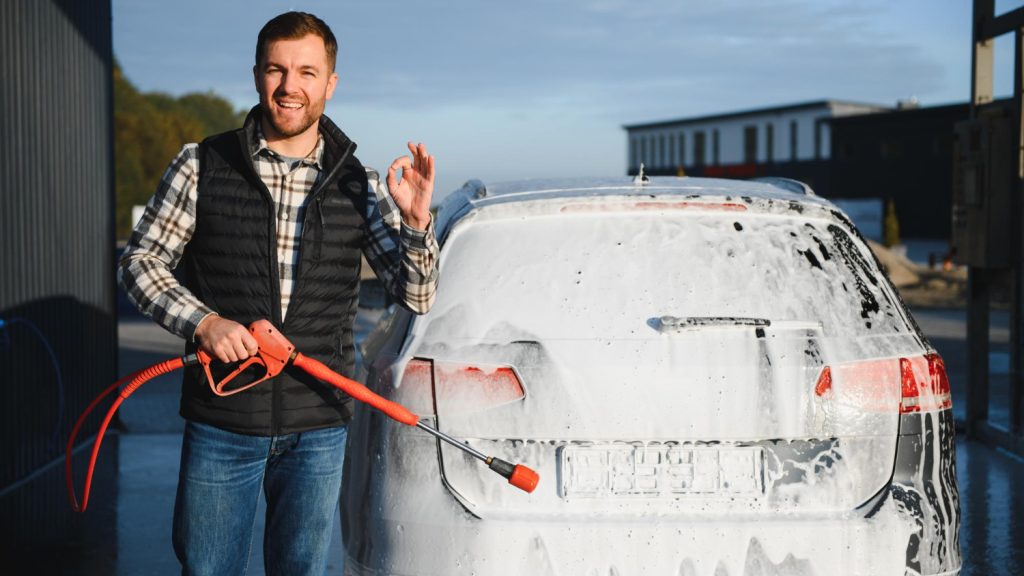
Not all car washes are equally safe. Depending on the machine, materials, and drying method used, paint protection can be compromised, allowing rust to begin.
Automatic Brush Wash
- Stiff or old brushes can scratch the clear coat.
- If the clear coat is damaged, the metal is gradually exposed.
- Then, when water and air combine, a rusting reaction can begin.
- The risk is higher if you use an old or improperly cleaned brush.
Touchless Wash
This method does not use brushes, so it creates less abrasion, but:
- If high-pressure water pushes water into existing dents or cracks
- And if it doesn’t dry properly afterwards, moisture may have accumulated.
Manual Home Wash
- When washing clothes at home, they are often not properly dried, which can lead to water accumulation in the gaps.
- Using an old cloth or a hard sponge can cause micro scratches.
Detailing Center / Soft Cloth Wash
- Detailers usually use microfiber cloth and controlled cleaning methods.
- If washed and dried properly, the risk of rust is very low.
Car Wash Type vs Rust Risk (Comparison)
Wash Type | Rust Risk | Why |
Touchless | Low | No abrasion |
Soft Cloth | Low–Medium | There is light contact. |
Brush Wash | High | scratch + apparent coat damage |
Home Wash | Medium | Wrong drying and bad tools |
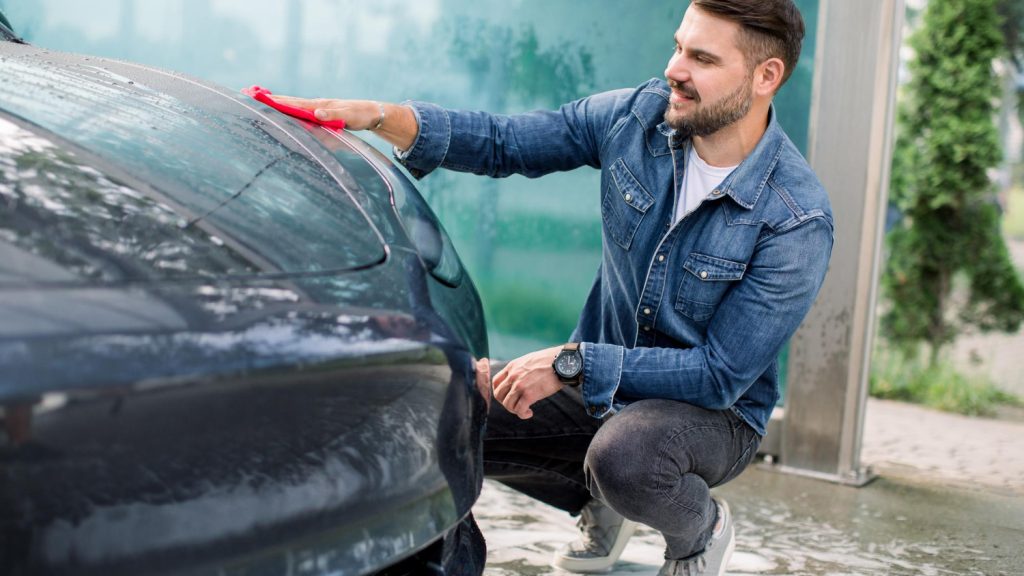
Under what circumstances does washing prevent rust?
In reality, most of the time, washing your car properly reduces rust, not increases it. Regular washing removes many of the substances that build up on your car’s surface, helping prevent corrosion if left unchecked.
How regular washing helps prevent rust:
- Washes away road salt or coastal salt, which quickly corrodes metal
- Removes industrial dust and mud, which retain water and create moisture traps
- Cleans air pollutants and road grime, which weaken the paint layer
- Removes tree sap and bird droppings, which can become acidic and damage paint.
- Cleans the undercarriage, reducing water and dirt buildup underneath

Common Myths About Car Wash & Rust
There are many misconceptions about car washes and rust. These need to be clearly understood so that you don’t damage your car by making the wrong decision.
Myth 1: “Water directly creates rust.”
Wrong. Metal needs to be exposed to rust to form. Water alone cannot cause rust if the paint or coating is in good condition.
Myth 2: “Rainwater cleans the car.”
Wrong. Rainwater can contain dust, pollutants, and minerals that can damage the paint layer.
Myth 3: “New cars never rust.”
Wrong. Even if there is a scratch, chip, or dent on a new car, rust can start there.
Myth 4: “Brush wash only removes paint, not rust.”
Incomplete concept. Paint damage – metal exposure – moisture enters – then the rust chain begins.
Understanding these misconceptions correctly reduces unnecessary fear about car washes and makes it easier to make the right maintenance decisions.
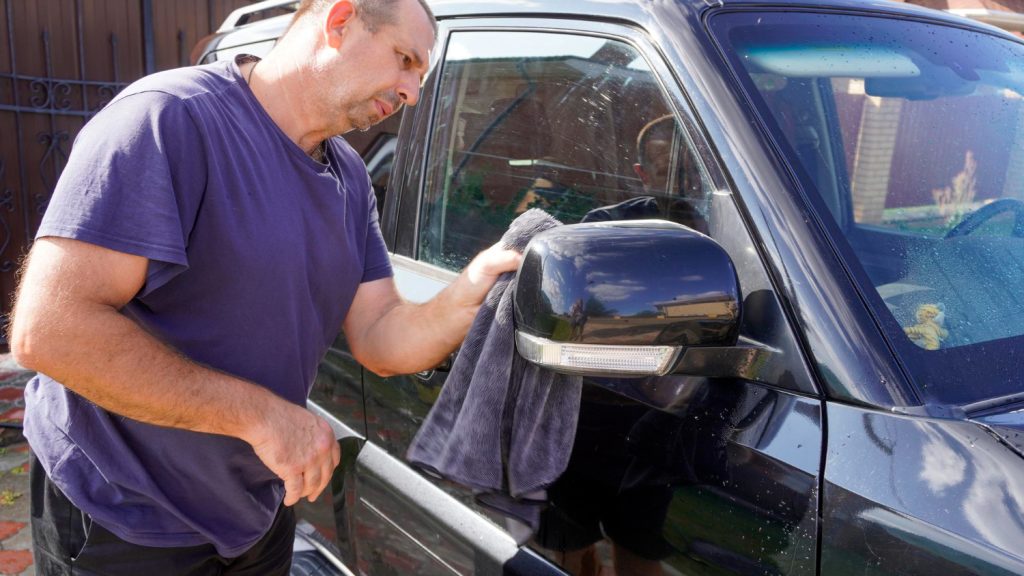
Does Car Wash Make Existing Rust Worse?
Yes, if the metal on the car is already exposed and oxidation has begun, then contact with water and air during washing can accelerate the spread of rust. So if there is already rust, not just a wash is needed, but repair or protection is required.
Familiar places where this problem is most common:
- Blistered paint: If the paint swells or peels, the metal beneath becomes exposed, and rust builds up quickly.
- Underbody surface rust: Dirt and moisture that accumulate under the car can accelerate corrosion.
- Wheel arch rust: Mud and water accumulate around the tires, which gradually causes rust to form.
In such a situation, just washing the car is not enough; it is more effective to clean the rust and apply a protective coating.
Professional Service Options
To keep your car rust-free and in good condition for a long time, it’s often best to get professional service. Especially if there is paint damage, moisture trapping, or incipient corrosion, a simple wash may not be enough.
Professional services that generally help reduce the risk of rust include:
- Full body wash: Cleans accumulated dirt and contaminants from the exterior of the car.
- Undercarriage wash: Removes salt, mud, and moisture accumulated under the car.
- Ceramic coating: Creates a strong protective layer over paint.
- Waxing: Adds a temporary protective coating to the paint surface.
- Rust inhibitor spraying helps prevent corrosion on the chassis and underbody.
- Paint correction: Reduces microscratches and swirl marks, restoring paint protection.
- Dent ও scratch repair: Covering exposed metal reduces the risk of future rust.
Cost of Prevention vs Rust Repair
Minor routine maintenance costs are very low for a car, but repair costs can quickly increase once rust sets in. So it’s always a cost-effective decision to get proper maintenance done right from the start.
A simple comparison of costs:
Prevention costs:
- Regular washing cost: Low, regular, but manageable.
- Protective coating বা waxing: Moderate cost, but protects paint in the long run.
Repair:
- Rust repair: Relatively high cost.
- Full repaint: Very expensive.
- Chassis বা structural repair: Costly and time-consuming.
It's safest to come to the best car wash center in Madaffah and get a free inspection.
FAQ
Does a car wash cause rust?
Generally not. However, rust can start if the paint is damaged or if water becomes trapped.
Does an automatic car wash increase rust?
If not maintained well, brushes can create scratches, which later increase the risk of rust.
Does an undercarriage wash reduce rust?
Yes. Cleaning the salt, mud, and moisture that accumulates under the car reduces the risk of corrosion.
Do hard water spots damage paint?
If mineral spots accumulate over time, the paint can become weak, creating an opportunity for corrosion to begin.
How often should a car be washed in Abu Dhabi?
Due to dust, humidity, and coastal winds, it is generally best to wash your car once a week, and a quick wash after a rainstorm or a dust storm will keep your car cleaner.
You may like!

How to Remove Pet Hair From Car Carpets (Madaffah, Abu Dhabi Guide)
How to Remove Pet Hair From Car Carpets (Madaffah, Abu...
Read More