How to Clean and Moisturize Car Leather Table of Contents1...
Read MoreHow to Clean and Moisturize Car Leather
Table of Contents
- 1 How to
Clean and Moisturize
Car Leather
- 1.1 Why Leather Dries Faster in Abu Dhabi
- 1.2 Identify Your Leather Type First
- 1.3 Tools You Need
- 1.4 How to Clean Car Leather Properly
- 1.5 How to Moisturize Car Leather Safely
- 1.6 When You Should Not DIY (Seek Help in Abu Dhabi)
- 1.7 FAQ
- 1.8 You may like!
- 1.9 How to Clean and Moisturize Car Leather
- 1.10 How to Remove Pet Hair From Car Carpets (Madaffah, Abu Dhabi Guide)
- 1.11 Can a car wash remove wax or polish?
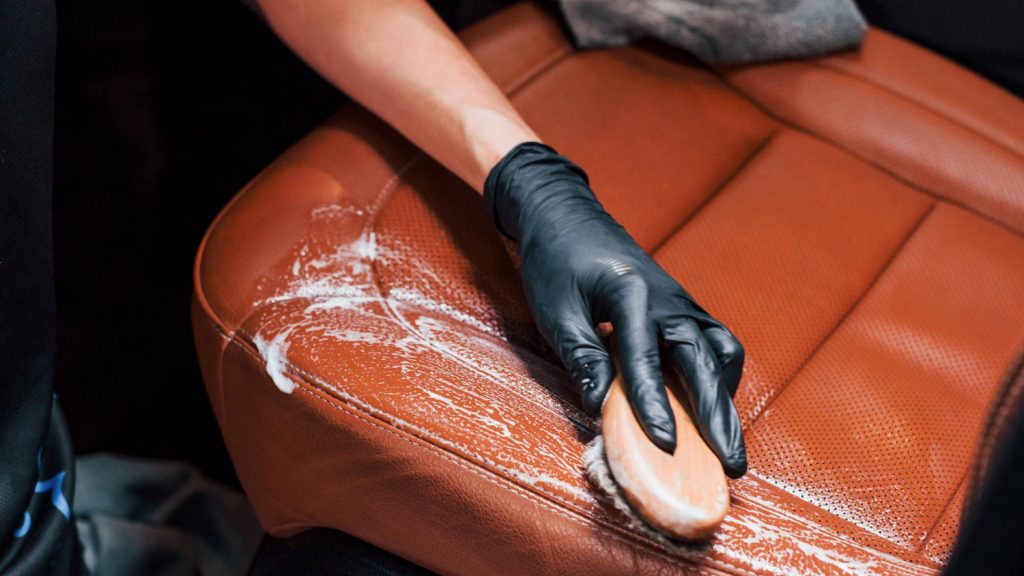
Keeping your car’s leather seats clean and soft quickly doesn’t have to be complicated. A few simple steps will keep your leather looking clean and reduce the chance of it drying out or cracking. Here’s a quick guide:
- Dust off: Remove light dust with a dry microfiber.
- Damp wipe: Wipe gently with a wet cloth.
- Leather cleaner: Rub gently with a small amount.
- Conditioner: Apply a thin layer, not too much.
- Absorb time: Do not let it dry in direct sunlight.
- Light buff: Finally, a soft buff restores the leather’s natural shine.
Why Leather Dries Faster in Abu Dhabi
In the Abu Dhabi climate, car leather dries out and hardens very quickly. Changes in temperature, dust, and humidity; all three factors combine to reduce the leather’s natural oils and damage the finish. The points below explain the reasons in simple terms.
Intense heat & UV in Madaffah
The inside of a car can quickly become overheated in the hot sun. This UV heat quickly dries out the leather’s natural protection, making it look hard and rough.
Desert dust settling into pores.
The Madaffah area is dusty and sandy. When this dust gets into the leather’s tiny pores, it causes the leather to “crack” and dry out more quickly.
Humidity shifts causing micro-cracks
This change in humidity, sometimes high, sometimes low, causes small micro-cracks to form in the leather. These grow larger over time, making the leather look rough.
Parked-car heat is damaging the leather topcoat
The temperature inside a car parked in the sun rises to 50–70°C. This excess heat softens the leather’s protective coating, which then dries and hardens, leading to fading or cracking.
Identify Your Leather Type First
Before cleaning or moisturizing your car’s leather, it’s important to know what type of leather it is, as each type of leather reacts differently to cleaning. Using the wrong method or product can easily stain, harden, or permanently damage leather.
Genuine leather
Genuine leather is soft and breathable, but it can’t withstand heavy cleaning or prolonged exposure to moisture. Gentle cleaning and a thin layer of conditioner are sufficient.
Faux/synthetic leather
Genuine leather looks similar, but synthetic leather has a plastic coating on its surface. Additional conditioning does not help. Light cleaning is best.
Perforated leather (AC seats, luxury cars)
If you apply too much cleaner or conditioner to porous leather, it will accumulate inside the pores. Use very little product and always wipe with a soft cloth.
Old, heat-damaged leather
Leather exposed to the Abu Dhabi sun for a long time quickly becomes hard, dry, and cracked. Harsh cleaners or excessive conditioners are not safe in this situation, as they can further soften and break down the leather. Gentle cleaning and gradual moisturizing are the way to go.
Tools You Need
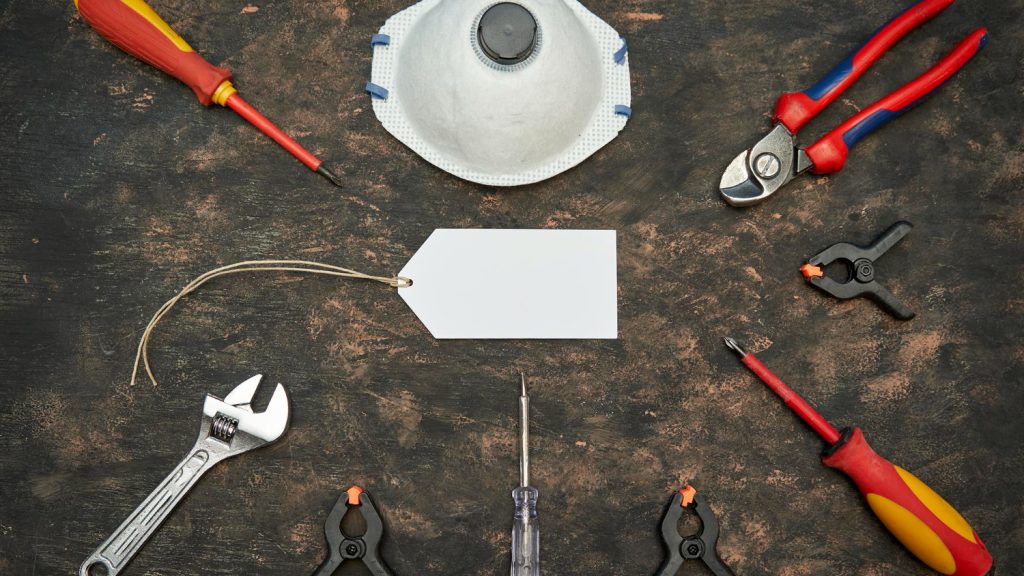
You don’t need many products to clean or moisturize leather. With a few simple tools, you can safely care for your car’s leather at home. The list below is short, easy to use, and completely safe for the Abu Dhabi weather.
- Microfiber cloth: The softest and safest cloth for dusting and cleaning.
- Leather cleaner (pH-balanced): Keeps leather clean without damaging its color or natural oils.
- Soft bristle brush: It is helpful for gently lifting deep dirt, not aggressive rubbing.
- Leather conditioner: It is essential to keep leather soft and supple after cleaning.
- Small applicator pad: Helps evenly apply conditioner.
- Distilled water (optional): Can be used lightly to remove stains or when wet wiping.
- Interior protectant (UV shield): Protects leather from the intense sun of Abu Dhabi and reduces dryness.
How to Clean Car Leather Properly
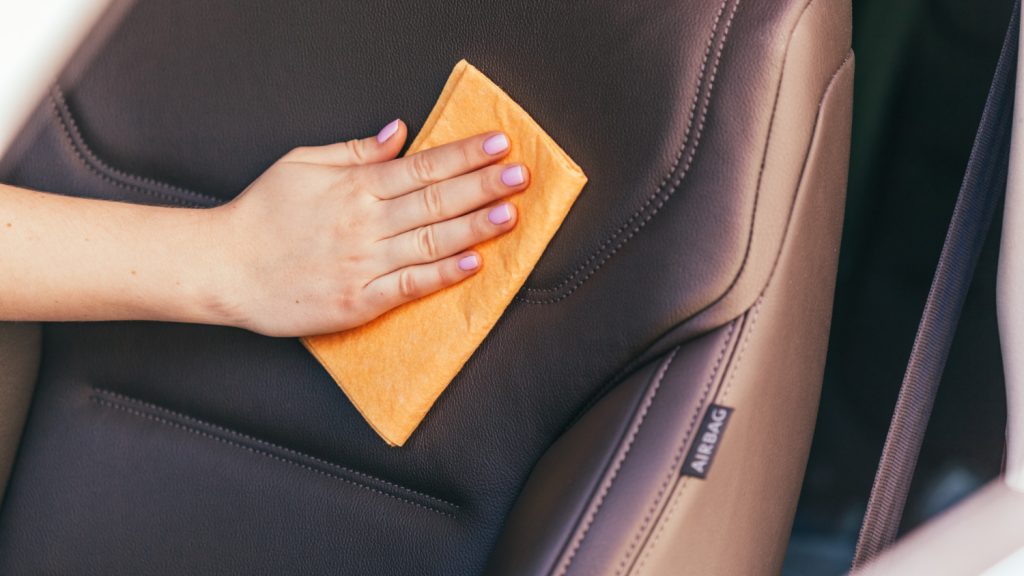
Cleaning car leather is not just about wiping; it’s about properly dusting, using the right cleaner, and finally letting the leather dry naturally. The following steps are simple, safe:
Step 1
First, gently remove all dust with a dry microfiber cloth. If you don’t remove the dust, it will cause abrasion and stains when using the cleaner.
Step 2
Put a little pH-balanced leather cleaner on a soft cloth and gently wipe the surface. Do not soak the surface; a thin layer is enough.
Step 3
If there are light stains on the leather, rub them very gently with a soft-bristle brush. Rough brushing or rubbing hard can damage the leather’s top coat.
Step 4
Now wipe the entire area with a soft, clean microfiber. Once you remove the excess moisture from the leather, the texture returns to normal.
Step 5
Never let leather dry in a hot car in the sun. Drying at normal temperatures keeps the finish soft and reduces the risk of it drying out and becoming hard.
How to Moisturize Car Leather Safely
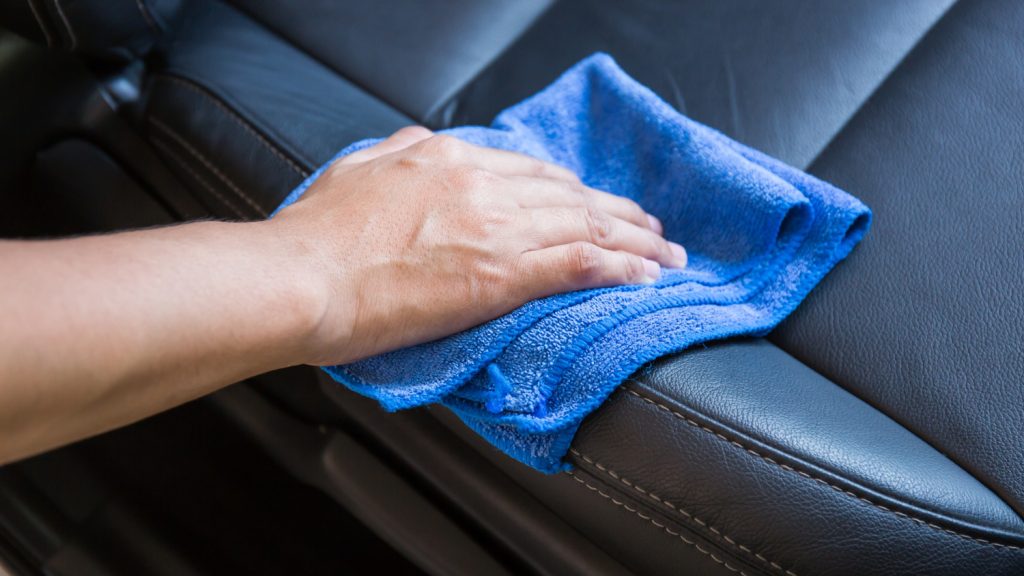
Moisturizing the leather after cleaning keeps it soft, helps maintain its color, and reduces the chance of it drying out. The steps below are simple, safe, and effective for any car’s leather.
Step 1: Choose the right conditioner
Choose a pH-balanced, non-greasy leather conditioner. Avoid products that are scented or very oily.
Step 2: Apply a thin layer only
Never apply too much conditioner. Applying a thin, even layer will help the leather absorb the necessary moisture. Applying too much will prevent the leather from breathing and from becoming sticky.
Step 3: Let it absorb (10–15 minutes)
Let it sit for a while. During this time, the conditioner will penetrate deep into the leather and soften the texture.
Step 4: Buff for soft texture
After drying, lightly buff with a clean microfiber. This will smooth out the leather’s finish and restore its natural shine.
Step 5: Avoid direct sunlight for 24 hours
Freshly conditioned leather is at risk of staining and fading when dried in the intense sun of Madaffah, Abu Dhabi. So avoid sitting or parking your car in the sun for at least 24 hours.
When You Should Not DIY (Seek Help in Abu Dhabi)
Leather can often be cleaned or moisturized at home, but in some cases, DIY attempts can actually damage it. So it’s safest to seek professional help if the following conditions arise.
If the leather has deep cracks, discoloration, or peeling, attempting to clean it at home can only worsen the damage. Similarly, if sand scratches the leather, regular cleaning will not remove those marks. Also, if the leather becomes sticky or greasy from excessive conditioner use, it isn’t easy to fix at home. Even if there are water stains or a slight moldy smell, DIY is risky; in such cases, professional detailers can clean and restore the leather, even inside.
It's safest to come to the best car wash center in Madaffah and get a free inspection.
FAQ
How often should you moisturize car leather in Abu Dhabi?
Once every 2-3 months is enough.
Can you use household cleaners on leather?
No, experts do not recommend it. Most household cleaners remove leather’s natural oils and can fade its color.
How do I fix dry or cracked leather?
You can treat mild dryness with conditioner, but only a professional can fully repair deep cracks. Dehydrated leather needs to be moisturized slowly in thin layers.
Can leather conditioner be applied too much?
Yes, it becomes sticky if you apply too much.
What is the safest cleaner for perforated leather?
Use a small amount of pH-balanced leather cleaner and always apply it with a soft cloth. Do not spray directly; otherwise, it will accumulate inside the pores.
You may like!
How to Remove Pet Hair From Car Carpets (Madaffah, Abu Dhabi Guide)
How to Remove Pet Hair From Car Carpets (Madaffah, Abu...
Read More